Strait of Hormuz Matters for India’s Economy and Security
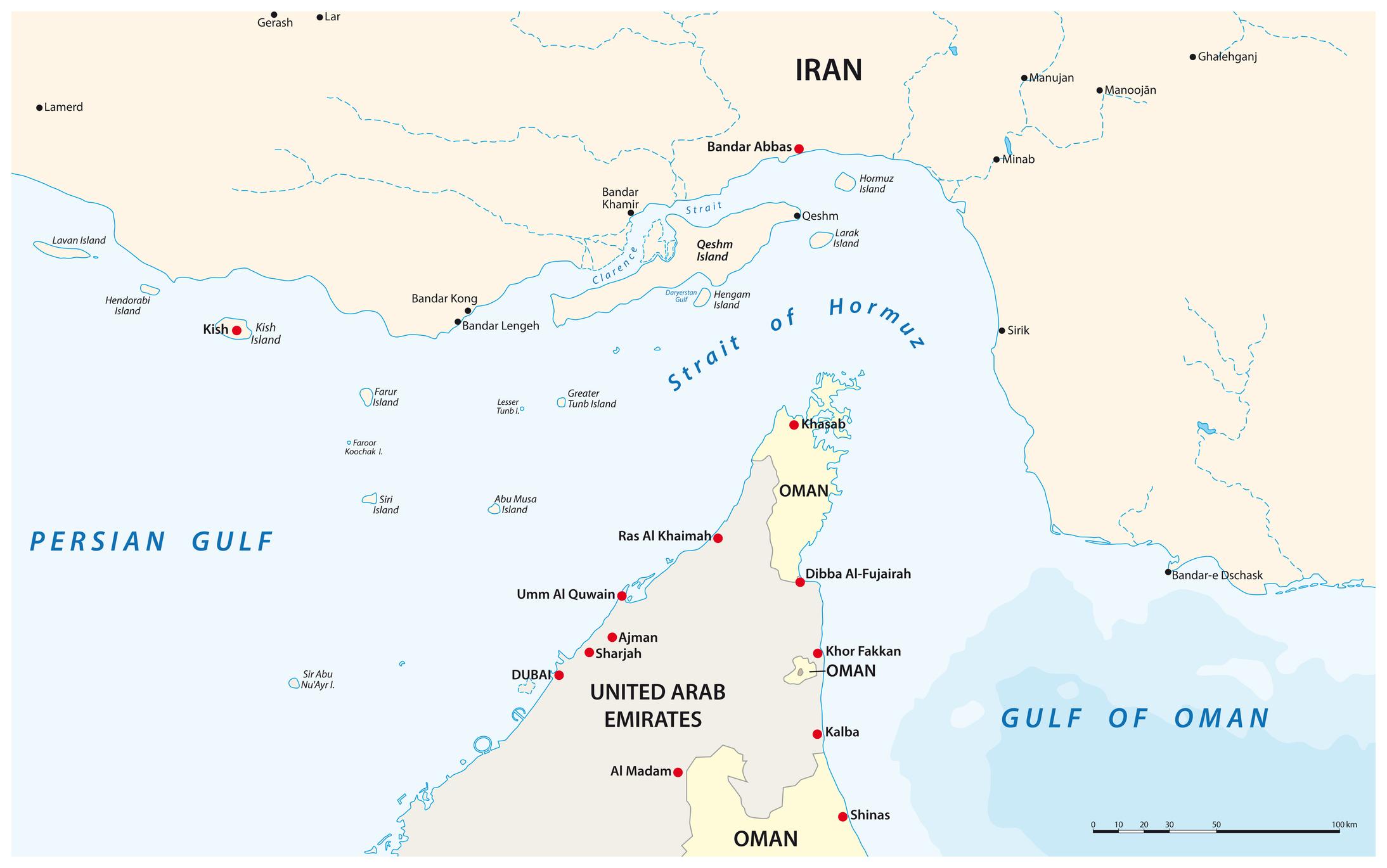
In an increasingly interconnected world, energy security and maritime trade routes form the backbone of global stability. Among these, the Strait of Hormuz stands out as the most critical chokepoint, often described as the “artery of global oil supply.” Any disruption here reverberates across economies, geopolitics, and security frameworks worldwide. Recent tensions involving Iran, the U.S., and Gulf countries highlight its fragile yet indispensable role.
What is a Maritime Chokepoint?
A maritime chokepoint is a narrow sea passage through which a significant portion of global trade flows, with limited or no alternative routes. These are geographical bottlenecks (straits, canals, narrow seas). Any disruption (conflict, piracy, blockade) can halt global supply chains. Examples: Hormuz, Malacca, Suez, Panama, Bab-el-Mandeb. Around 70–80% of global trade by volume passes through sea routes, making chokepoints strategically vital.
Why is the Strait of Hormuz Critical?
1. Energy Artery of the World
- Connects Persian Gulf → Gulf of Oman → Arabian Sea
- Handles about 21 million barrels/day (~20% of global oil consumption)
- Also carries large volumes of LNG (Liquefied Natural Gas), Countries like India, China, Japan, South Korea are heavily dependent on this route.
2. Strategic & Geopolitical Significance
- Lies between Iran and Oman/UAE
- Frequent tensions (Iran–U.S.–Gulf rivalry) make it a flashpoint
- Even minor disruptions lead to:
- Surge in oil prices
- Inflationary pressures
- Global economic slowdown
Lack of Alternatives
- No equally efficient alternative route exists
- Tankers cannot be easily rerouted → increases vulnerability
International Law & Governance
- Governed by the United Nations Convention on the Law of the Sea (UNCLOS)
- Principle of “Transit Passage”: Ships and aircraft can pass freely without obstruction Coastal states can regulate for safety and environment, but: Cannot arbitrarily block passage .
- However, enforcement depends on naval power and global cooperation, making law secondary to geopolitics in crises.
- Between Yemen & Horn of Africa
- Links Red Sea → Indian Ocean
- Vulnerable to piracy and conflicts
Other Important Global Chokepoints
1. Strait of Malacca
- Between Malaysia–Indonesia
- Shortest route between Indian Ocean & Pacific Ocean
- Backbone of Asia-Europe trade
2. Suez Canal
- Connects Red Sea & Mediterranean Sea
- Eliminates need to go around Africa
- ~12% of global trade passes
3. Panama Canal
- Connects Atlantic & Pacific Oceans
- Key for trade between Americas, Europe, Asia
4. Bab-el-Mandeb Strait
- Between Yemen & Horn of Africa
- Links Red Sea → Indian Ocean
- Vulnerable to piracy and conflicts
For India, the Strait of Hormuz holds immense strategic and economic significance due to its heavy dependence on energy imports and maritime trade. Nearly 85% of India’s crude oil requirement is imported, and a substantial portion of this supply passes through the Strait of Hormuz. Consequently, any disruption in this chokepoint—whether due to geopolitical tensions, military conflicts, or blockades—can lead to sharp increases in oil prices, thereby fueling inflation, widening the current account deficit, and exerting pressure on the fiscal balance. Moreover, such disruptions can adversely impact key sectors like transport, manufacturing, and agriculture, ultimately slowing down economic growth.
From a strategic perspective, the vulnerability of this route necessitates a strong naval presence and maritime vigilance in the Indian Ocean Region. India has increasingly focused on securing sea lanes of communication (SLOCs) through initiatives such as mission-based deployments and cooperation with friendly nations in the Gulf region. Additionally, the situation underscores the importance of energy security measures, including the development of Strategic Petroleum Reserves (SPR), diversification of import sources, and long-term investments in renewable energy to reduce overdependence on West Asian oil. Thus, the Strait of Hormuz is not merely a distant geopolitical concern but a critical determinant of India’s economic stability, foreign policy, and national security architecture.
The Strait of Hormuz is not merely a narrow waterway but a strategic fulcrum of global energy security and geopolitical stability. In a world increasingly dependent on seamless energy flows, any disruption here can trigger cascading economic and political crises. For countries like India, it underscores the urgent need for energy diversification, maritime security, and diplomatic balancing. As Alfred Thayer Mahan emphasized, “Whoever controls the seas controls the world”—a statement that continues to hold true in the context of modern maritime chokepoints.
Source: The Hindu (16 April,2026) with Team Eduteria Input