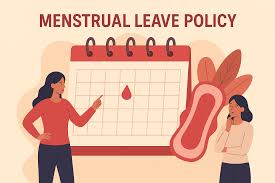
Menstrual Leave Policy
"Towards a Nuanced and Inclusive Approach"
Introduction
- Menstruation is not “just a period”; it is a biological process of staggering intensity.
- Uterine contractions, powered by prostaglandins, are comparable to early labour pains. Conditions like dysmenorrhea, menorrhagia, fatigue, gastrointestinal distress, and mood swings make menstruation a significant medical event.
- Yet, societal and workplace attitudes often stigmatize menstruation, treating it as impure or taboo, creating barriers to education and employment for women.
Current Challenges in India
- Social Stigma and EducationPeriods are considered polluting, leading to school absenteeism and dropouts.
- Lack of dignified sanitation facilities exacerbates exclusion.
- Workplace BarriersWomen often use sick leave to manage menstrual distress, facing humiliation and discomfort.
- There is a lack of structured workplace policies that accommodate menstrual health needs.
Legal Perspective
- Supreme Court Ruling: Dr Jaya Thakur v. Government of India & Ors. (2026)Denying dignity during menstruation violates Article 21 (Right to Life and Dignity).
- Failure to provide clean toilets and sanitary products violates Article 21A (Right to Education).
- True equality must account for biological differences, not treat all employees identically.
- Principle: “Human dignity cannot be fragmented.”
Arguments for Menstrual Leave
- Normalising Biological RealitiesSimilar to maternity leave, menstrual leave recognises women as long-term assets requiring temporary accommodation for biological events.
- Workforce StabilityEvidence shows gender-sensitive policies improve job satisfaction, reduce stress, and increase employee loyalty (Verma, Bhal, Vrat, 2013).
- Concerns that menstrual leave discourages hiring women are historically unfounded, similar to initial opposition to maternity and sick leave.
- Policy ImplementationMenstrual leave should extend beyond a few days, integrating:
- Free sanitary products
- Hygienic toilets and disposal facilities
- Awareness campaigns to reduce stigma
Inclusivity in Menstrual Leave
- Policies must cover all menstruators, including:
- Unorganised-sector workers
- Trans and non-binary individuals who menstruate
- This ensures equity and social justice, making the policy truly nuanced and inclusive.
Policy Recommendations
- Government-Led FrameworkDevelop uniform menstrual leave policies across states and workplaces.
- Integrate with public health and labour regulations.
- Workplace ImplementationEncourage private and public employers to adopt inclusive menstrual leave policies.
- Ensure supportive infrastructure and awareness alongside leave.
- Educational IntegrationInclude menstrual health education in schools and workplaces to destigmatize periods.
Conclusion
- Menstrual leave is not a privilege but a necessary policy for dignity, equity, and workforce inclusion.
- A nuanced, inclusive approach benefits individuals and organisations by:
- Improving health outcomes
- Enhancing job satisfaction
- Normalising gender-sensitive workplace practices
Key Takeaway: Menstrual leave policies must be comprehensive, equitable, and inclusive, addressing both biological realities and social inequities.
Question:
"Menstrual leave policies are not just a matter of workplace convenience but a question of dignity, equity, and social justice. Critically examine the need for a nuanced and inclusive menstrual leave policy in India. Discuss the challenges in implementation and suggest measures to make it effective across sectors."
SOURCE: Menstrual leave policy must be nuanced, inclusive | The Indian Express